

Your Step-by-Step Guide to a Stress-Free Move
Start with a Moving Checklist
Before packing a single box, create a moving checklist that outlines what needs to be done each week leading up to your move.- Gather moving boxes and packing supplies
- Schedule your moving date
- Notify utilities and change your address
- Sort items to donate or discard
- Pack one room at a time
- Label every box clearly
- Set aside an essentials box for moving day
Kitchen Packing Tips
The kitchen usually takes longer to pack than expected because it contains fragile dishes, appliances, pantry items, and oddly shaped cookware.What to Pack First
Pack items you don’t use every day, including:- Seasonal cookware
- Specialty appliances
- Extra dishes
- Decorative serving pieces

Protect Breakables
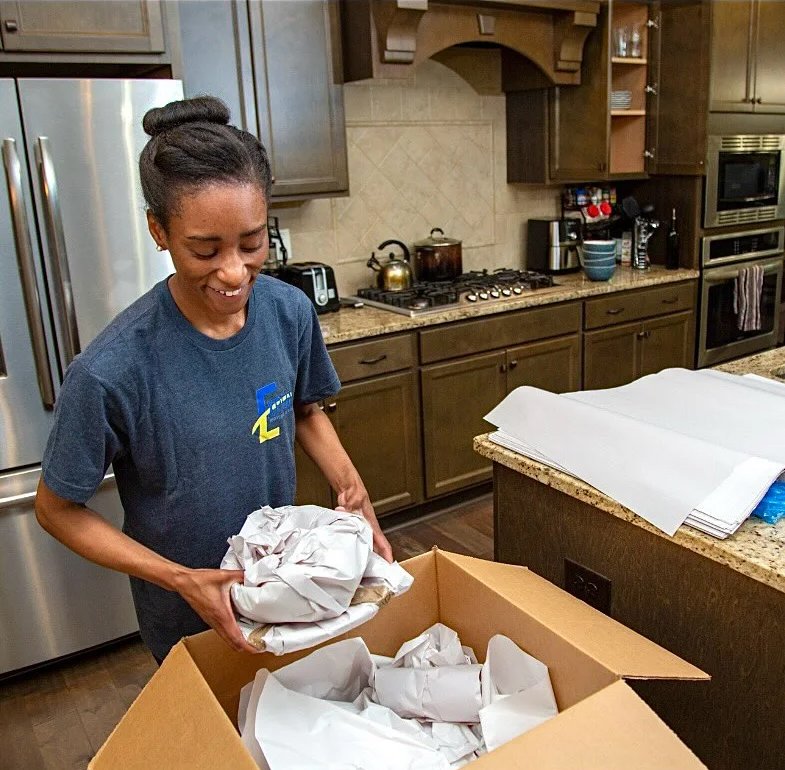
Wrap glasses and dishes individually using packing paper or bubble wrap. Place heavier items at the bottom of the box and lighter pieces on top. Avoid overfilling boxes, especially with heavy kitchen items.
Pantry Organization
Use up perishable foods before moving day whenever possible. Seal opened pantry items in plastic bags to prevent spills during transport.
Bedrooms
Bedrooms are often easier to pack because most items are soft and lightweight.
Start by packing:
- Off-season clothing
- Extra bedding
- Decorative items
- Books
- Wall décor
Keep everyday clothing available until the final few days before your move. If possible, leave clothing in dresser drawers if your movers approve and the furniture can be safely transported.
Organizing Closets
Closets tend to collect years of unused belongings, making them a great place to start decluttering before your move.
Before packing:
- Donate clothes you no longer wear
- Dispose of damaged shoes
- Sort accessories
- Recycle unused storage containers
Wardrobe boxes are excellent for transporting hanging clothes while keeping everything wrinkle-free. Smaller closet items can be grouped into labeled bins to make unpacking much easier.
Garage and Storage Areas
Garages often contain some of the heaviest and most difficult items to move, so packing them carefully is important.
Pack similar items together, including:
- Hand tools
- Gardening supplies
- Sports equipment
- Holiday decorations
Drain gasoline from lawn equipment if required and safely dispose of hazardous chemicals that cannot be transported. Use sturdy boxes since garage items are often heavier than typical household belongings.
Packing Fragile Items
Fragile belongings deserve extra attention to ensure they arrive safely at your new home.
This includes:
- Mirrors
- Artwork
- Glass tabletops
- China
- Picture frames
- Collectibles
Wrap every item individually and fill empty spaces inside boxes so nothing shifts during transportation.
Clearly label these boxes as FRAGILE — HANDLE WITH CARE.
If you’re concerned about valuable or delicate items, professional packing and moving services can provide specialized packing materials and techniques to help protect your belongings.
Protecting Electronics
Electronics can be expensive to replace, so proper packing is essential.
Before disconnecting equipment:
- Take photos of cable connections
- Label cords and accessories
- Remove batteries when appropriate
- Back up important files
Whenever possible, pack electronics in their original boxes. If those aren’t available, use sturdy boxes with plenty of cushioning to protect against movement during transit. Place accessories and remote controls in labeled bags so they’re easy to find after the move.
Label Every Box
One of the simplest packing tips for moving is also one of the most important: label everything.
Every box should include:
- Destination room
- General contents
- Fragile designation if needed
- Priority level for unpacking
For example:
- Kitchen – Plates & Glassware – Fragile
- Primary Bedroom – Linens – Open First
Some homeowners also use colored labels or markers to quickly identify boxes for each room. Taking a few extra seconds to label boxes properly saves hours during unpacking.
Pack an Essentials Box
Keep one box or suitcase with the items you’ll need immediately after arriving at your new home.
Include essentials such as:
- Toiletries
- Medications
- Phone chargers
- Important documents
- Basic kitchen supplies
- Snacks
- Water bottles
- A change of clothes
Having these items easily accessible helps you settle in without digging through dozens of boxes.
Make Your Move Easier with Professional Help
Packing doesn’t have to be overwhelming. With a detailed moving checklist, organized planning, and smart packing tips for moving, you can make moving day much less stressful.
If you’d rather leave the packing to experienced professionals, Expedite Moving & Logistics offers dependable packing and moving services designed to protect your belongings and simplify your relocation. From carefully wrapping fragile items to loading everything efficiently, our team is here to help every step of the way.
Ready for a smoother move? Contact Expedite Moving & Logistics today to learn more about our professional packing and moving services and request your free moving estimate.